Received the FY2026 Minister of Land, Infrastructure, Transport and Tourism Award (River Fund Grant Program)

Associate Professor Takashi Nakamura, the faculty supervisor of our laboratory, has received the FY2026 Minister of Land, Infrastructure, Transport and Tourism Award in the Researchers and Research Institutions Category of the River Fund Grant Program, presented by the River Foundation.

The award recognizes outstanding research projects completed in FY2025 with support from the River Fund, which is administered by the River Foundation. This year, Professor Nakamura was selected as the sole recipient from among 107 research projects.

In this study, we investigated representative types of life jackets and evaluated the flotation behavior of the human body in flowing water to identify the types of life jackets suitable for use in rivers. By combining pool experiments to assess life jacket performance with numerical simulations, we evaluated their effectiveness in improving safety in flowing water and obtained findings of practical importance. These findings provide a scientific basis for the development and improvement of life jacket certification standards and are expected to contribute to the prevention of water-related accidents.

The award ceremony was held on August 21, 2026, during the FY2026 River Fund Grant Program Research Results Presentation Meeting, where Professor Nakamura was presented with the award certificate.
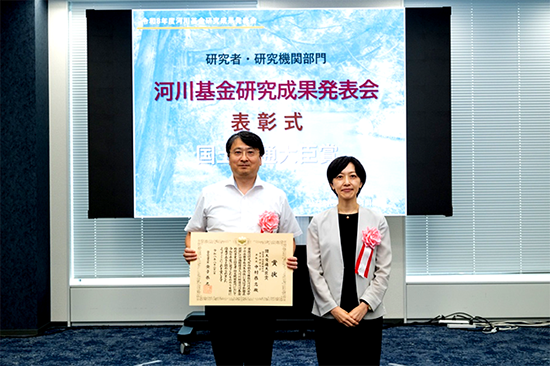
 

左側:中村恭志准教授

Left: Associate Professor Takashi Nakamura

Pool Tests to Evaluate Life Jacket Performance as Part of the Award-Winning Research
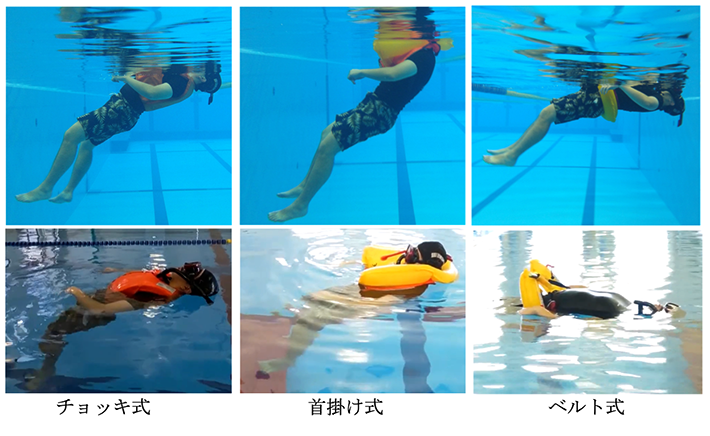
受賞研究における,救命胴⾐のプールでの性能確認実験

Simulation of a Person Wearing a Life Jacket in a River as Part of the Award-Winning Research
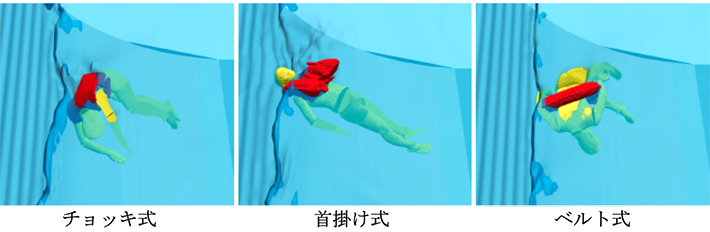
受賞研究における,河川における救命胴⾐着⽤者のシミュレーション 関


Master’s Thesis Presentations Were Held

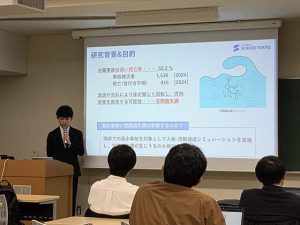
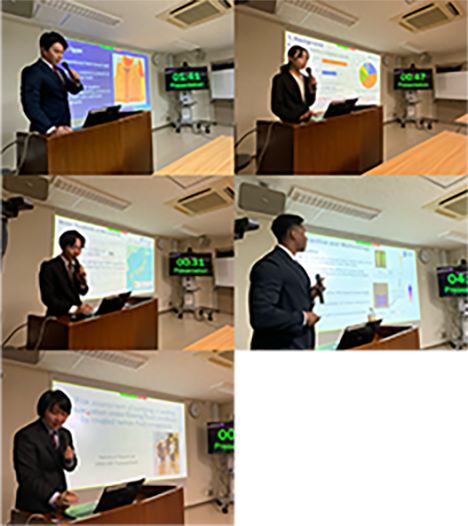
The master’s thesis presentations for students completing their degrees in March 2026 were held. Five master’s students from our laboratory presented their research and discussed their findings during the question-and-answer sessions. They all gave excellent presentations. Congratulations to everyone!

Undergraduate Research Experience

An undergraduate student visited our laboratory to gain hands-on research experience and conducted numerical simulations. The student investigated the forces acting on a person walking through flowing water under two conditions: freshwater and muddy water.

Walking in Freshwater with a Flow Velocity of 10 cm/s

Walking in Muddy Water with a Flow Velocity of 10 cm/s

Our Research Was Presented at the JSCE Annual Conference on Hydraulic Engineering

A master’s student from our laboratory presented their research at the JSCE Conference on Hydraulic Engineering held in Koriyama.

Accidents in irrigation canals are considered particularly dangerous because the hydrodynamic forces acting on the human body can become large. In this study, we conducted comprehensive numerical simulations under various canal widths, water depths, and flow velocities to evaluate the associated risks.

The research findings are expected to be published in the conference proceedings.

It was an excellent presentation. Great work!


Stay Safe Around Water! A Water Safety Awareness Video Has Been Released

One of the causes of drowning accidents in fast-flowing rivers is foot entrapment. If a person attempts to stand up in a strong current, their foot may become trapped between underwater rocks or other obstacles. The force of the flowing water can then push the person underwater, making it difficult to escape.

To prevent water-related accidents, it is important to wear a life jacket. In addition, when caught in a strong current, adopting the whitewater floating position, in which the feet are kept raised while floating on the back, can help reduce the risk of foot entrapment.

Recent Research Highlights

If a person’s foot becomes trapped between underwater rocks, tree branches, or illegally dumped large debris, the force of the current may prevent them from standing up, potentially leading to drowning. This type of accident is known as foot entrapment. To raise awareness of this hazard, we conduct coupled simulations of the human body and water flow, visualizing the forces acting on the body and related phenomena.

The whitewater floating position is one technique for reducing the risk of foot entrapment. If you are swept away by a strong current, floating on your back with your feet raised near the water surface can help prevent your feet from becoming trapped by underwater obstacles.

However, always remember that wearing a life jacket is the most important safety measure for preventing water-related accidents.

Our Research Findings Used to Promote River Safety Awareness


The River Foundation, a public interest incorporated foundation, is engaged in a wide range of activities related to rivers in Japan. These include the conservation and restoration of healthy river ecosystems and water cycles, the development of effective river management methods, and the promotion of safe and appropriate use of rivers and waterfront areas.

A drowning simulation developed in our laboratory will be featured on the River Foundation’s YouTube channel to help raise awareness of river safety.

One of the major hazards associated with river accidents is the presence of strong currents. If a person’s body comes into contact with an underwater obstacle, such as submerged driftwood, the current may push the person against the obstacle, making it difficult or impossible to move underwater. This type of accident is known as body entrapment.

To reduce the risk of water-related accidents, it is important to wear a life jacket when approaching rivers or other bodies of water. In addition, if you are swept away by a current, adopting a whitewater floating position, with your knees and toes raised near the water surface, can help reduce the risk of becoming trapped by underwater obstacles.