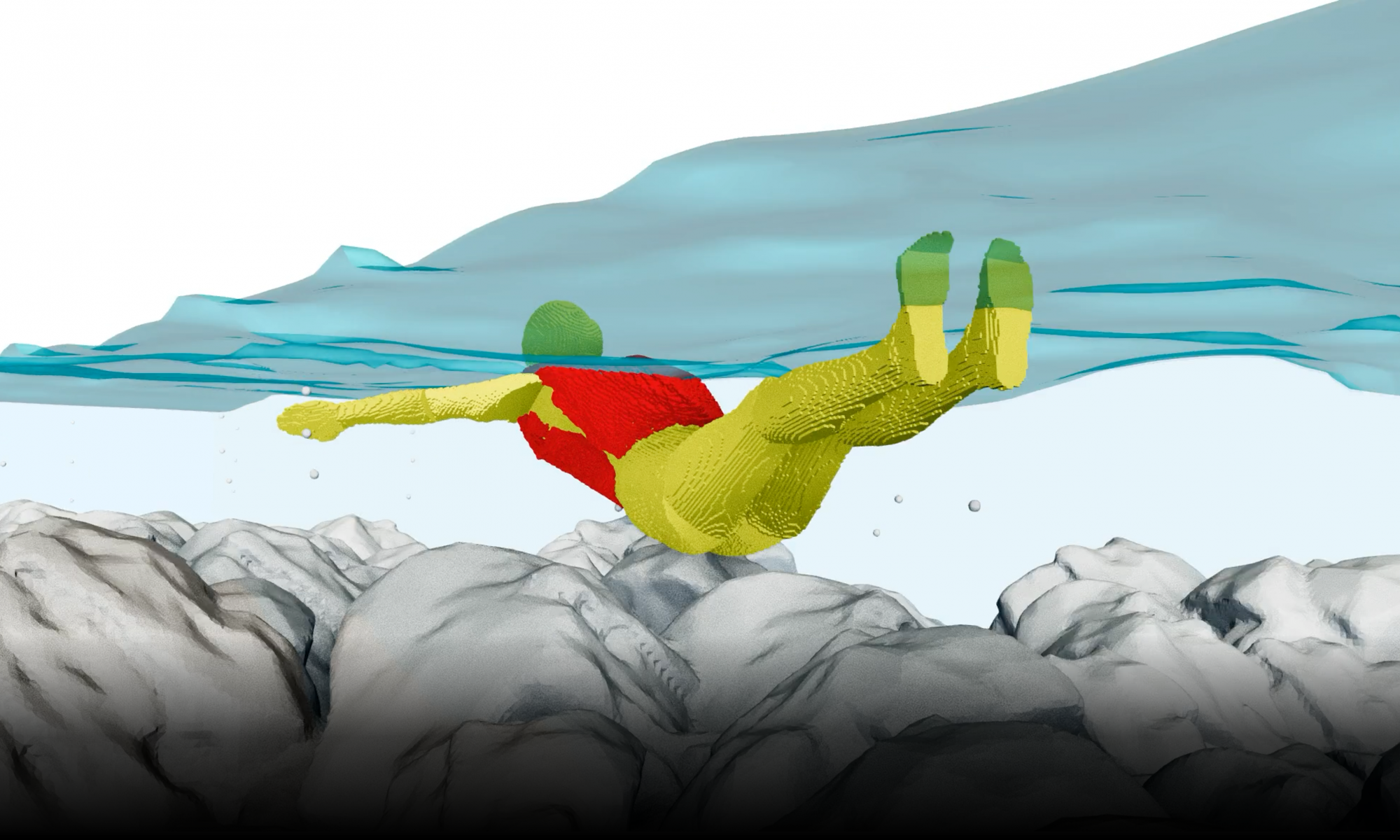
Simulation models capable of analyzing interactions between water flow and the human body are useful for assessing the risks associated with water-related accidents, such as being engulfed by a tsunami.
Our laboratory is developing a new simulation model called the DRowning hUman Model (DRUM). This model combines three-dimensional fluid flow simulations with simulations of human body motion that account for joint movements. By considering the interactions between water flow and the human body, DRUM can simultaneously simulate fluid flow and human body motion.
DRUM Simulation Examples
① Drowning Risk Assessment at Low-Head Dams (Weirs)
Low-head dams (weirs) constructed in rivers are known to create dangerous flow conditions that can lead to drowning accidents. Using DRUM, we simulated the motion of a human body wearing a life jacket and confirmed that wearing a life jacket promotes resurfacing and improves the chances of survival in such accidents.
(Download the published paper here)
(1) Without a Life Jacket
(1) With a Life Jacket
② Injury Risk Assessment for Falls into Water from Heights
This study evaluates the risk of injuries caused by falling into water from elevated locations, such as bridges. DRUM calculates the impact forces acting on the human body when it collides with the water surface or riverbed. By applying injury assessment methods commonly used in automobile crash safety studies, we estimate the types and severity of injuries, as well as the probability of survival, based on the impact forces and accelerations experienced by the human body.
(Download the published paper here)
(1) Upright Posture
(2)Prone Position (Face-up)
③ Human Body Motion in River Channels with Weirs
Victims of water-related accidents are often carried downstream by river currents. This study investigates the conditions under which a human body may become trapped at a weir installed on the riverbed. By identifying locations where victims are likely to remain, we aim to narrow down search areas and facilitate faster and more effective search and rescue operations.
(Download the published paper here)
④ About the DRUM Model
The DRUM model incorporates the joints of the human body to simulate changes in body posture. The simulation on the left considers joint movements, while the one on the right does not. The comparison shows that accounting for joint movements and the resulting changes in body posture significantly affects how the human body sinks into the water.
(For more details about the DRUM model, please refer to our published paper)
Simulation Example of a 7-Meter-High Tsunami
Entrapment by a Recirculating Vortex Behind a Step
Basic Concept of DRUM
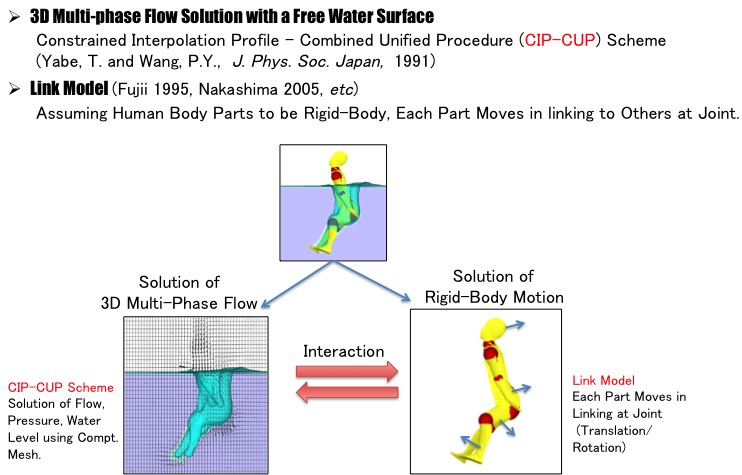
Fluid flow is simulated using a three-dimensional multiphase flow model that simultaneously accounts for air and water. Changes in human body posture are simulated using a linked rigid-body model, in which the human body is represented as a set of rigid segments connected by joints. The interaction between fluid flow and the human body is modeled by integrating the fluid pressure over the surface of each body segment to calculate the forces acting on it.
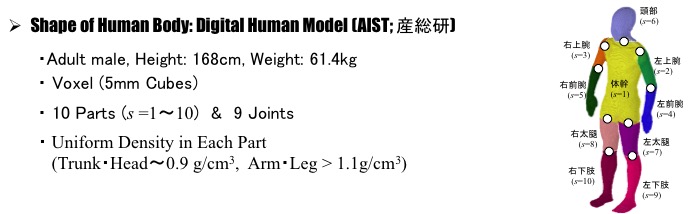
Representation of the Human Body
The geometry of each body segment is represented in the simulation model using digital human body data.
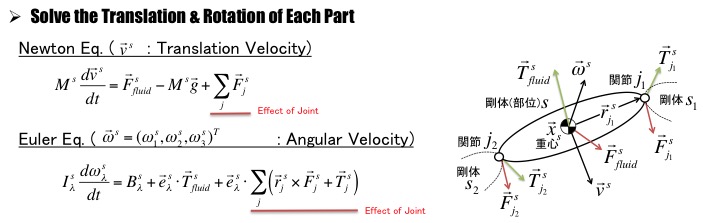
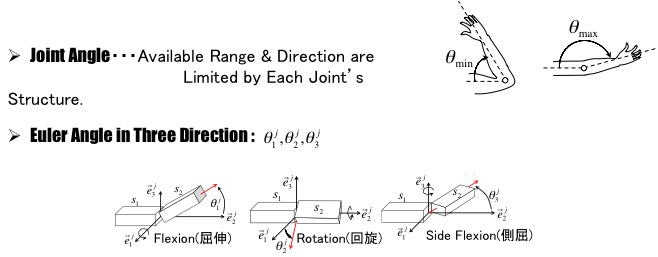
The translational and rotational motions of each body segment are calculated by considering the forces exerted by the joints and the surrounding fluid. Joint movements are constrained based on data on the actual range of motion of human joints, ensuring that each joint moves only within its physiological limits.
Experimental Validation of the DRUM Model
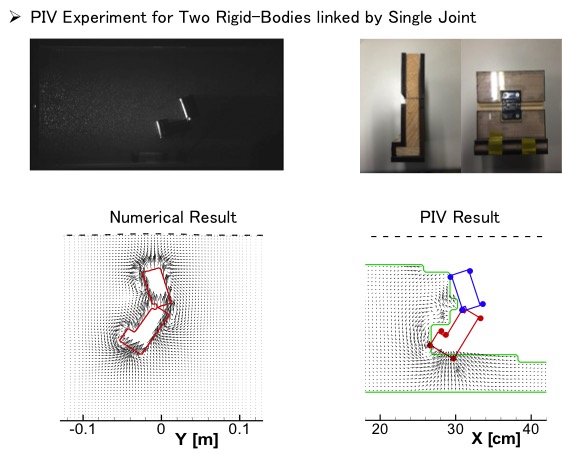
To validate the accuracy of DRUM simulations, we conduct particle image velocimetry (PIV) experiments to measure flow velocity distributions using laser illumination and image analysis techniques.